Quick Summary
Startups begin with an idea (Ideation), then develop a business concept. Validation tests market fit and funding potential. Growth involves scaling operations, followed by Expansion into new markets. Maturity stabilizes business processes, and the Possible Exit stage includes acquisition or IPO.
By mastering the 7 stages of business success, you can avoid costly penalties and delays, ensuring smoother progress toward success.
Quick-Facts
- Most startups fail within 3-5 years due to poor stage management.
- The Ideation stage typically lasts 1-3 months
- Validation stage success rate averages 30% for securing initial funding
- Growth stage often requires compliance with 20+ local and national regulations (Source: Ministry of Corporate Affairs)
- The expansion stage involves a 40-60% increase in operational complexity
- Maturity stage startups contribute over 50% of GDP in developed economies
- Penalties for startup compliance failures can reach up to ₹10 lakhs or more, depending on jurisdiction (Source: Ministry of Finance, India)
What is a Startup?
A startup is a business venture designed to scale rapidly, centered around an innovative product or service that solves a specific market pain point. For any new entrepreneur, the "startup" approach is vital because it changes your business from a local shop into a global performer.
Here is why the startup mindset is so important for scaling your business:
1. It’s Built to Scale
A traditional small business (like a local cafe) usually grows at a linear pace, which may result in bringing in a few customers. A startup is designed to grow exponentially. It uses technology and systems so that you can serve 10,000 customers just as easily as 10.
2. It Solves Real Problems
Startups don’t just sell products; they solve "pain points." Tand attract Angel Investors and Venture Capitalists, allowing a new business to grow much faster than it could byhis focus on innovation is what fuels rapid growth.
3. Attracting Investors
Startups are usually designed for high growth and attract Angel Investors and Venture Capitalists, allowing a new business to grow much faster than it could by reinvesting its own small profits.
4. Agility and Speed
Startups operate on the "Lean" principle. They move fast, fail fast, and learn fast. This agility allows a new business to pivot if something isn't working, ensuring they don't waste years on a failing strategy.
5. Creating a Competitive Edge
In today's world, if you aren't innovating, you're stagnating. A startup focus ensures that your business stays ahead of the curve, making it difficult for older, slower competitors to keep up with you.
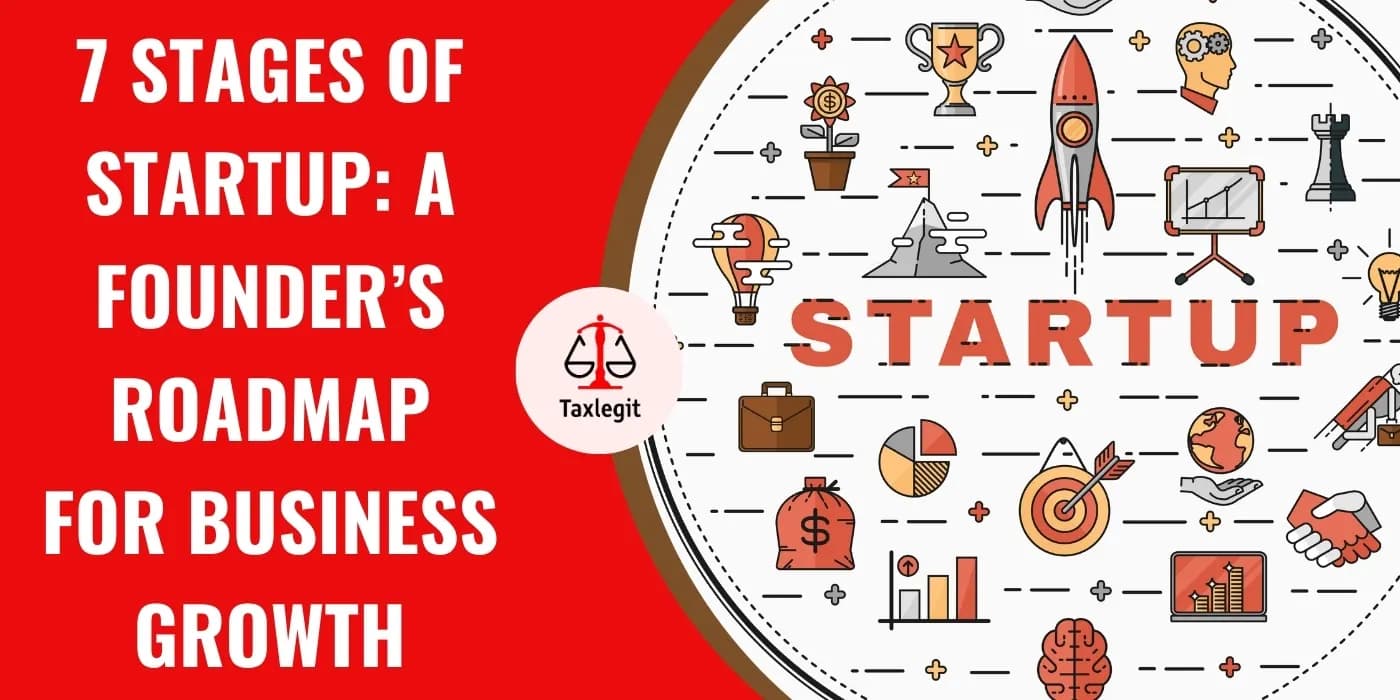
What are the 7 stages of a startup?
7 stages of a startup play a crucial role in scaling a business and require distinct actions and compliance measures to ensure success.
Here are the 7 Stages of Startup Growth with practical steps and examples:
1. Pre-Seed Stage: Develop Your Idea
This stage starts with finding a problem and planning a solution. Concept Development involves refining the business model, conducting market research, and preparing initial prototypes or service outlines.
Inadequate attention to compliance during this phase, such as neglecting trademark registration or non-disclosure agreements, can expose startups to legal risks that disrupt growth.
Focuses:
- Research the market: Talk to possible customers and check competitors.
- Test if the idea is practical: See if it can make money.
Funding: Use your own savings or money from friends and family (often under ₹5-10 lakhs in India).
2. Seed Stage: Build and Test a Basic Product
This stage heavily influences investor confidence and funding opportunities.
Failing to comply with financial reporting or tax regulations during Validation can result in penalties and loss of investor trust, delaying business expansion.
Key Focuses:
- Collect opinions from customers: Show the basic product and make changes.
- Improve the product: Fix problems based on what people say.
Funding: Get money from early investors (₹10-50 lakhs).
Example: Dropbox shared a short video to test interest before building the full service.
3. Early Stage: Launch and Gain Customers
This marks the initial phase where businesses put their product on the market. You can attract your first paying customers at this stage and use data to show your business plan works.
Key Focuses:
- Find new customers: Use social media, ads, or emails.
- Build your brand: Design a logo and simple website.
Hiring: Add 2-5 key team members for sales, technology, and daily tasks.
Example: Instagram started with a small group of users and grew step by step.
4. Growth Stage: Expand Quickly
The Growth stage requires startups to scale operations rapidly while adhering to labor laws, tax codes, and industry-specific regulations. Business decisions must balance expansion with maintaining compliance to avoid operational setbacks.
Key Focuses:
- Grow sales: Set better prices and sell more to current customers.
- Automate tasks: Use software to save time.
Funding: Raise larger amounts from investors (₹5-50 crores).
Example: Flipkart grew from selling books to many products by improving operations.
5. Expansion Stage: Add New Options
Expansion involves entering new markets, increasing product lines, or scaling geographically. This stage demands complex compliance management, including cross-border regulations and increased reporting requirements.
Key Focuses:
- Grow the team: Hire experts for marketing, human resources, and new markets.
- Add variety: Offer related products while staying focused.
Funding: Get big investments from partners.
6. Maturity Stage: Become a Stable Leader
Your business runs smoothly with reliable income and many customers. Focus on keeping your position strong.
Key Focuses:
- Hold your market position: Update products to beat competitors.
- Increase profits: Reduce costs and improve earnings.
Hiring: Add senior leaders.
Example: Google stands out by developing new tools like Android.
7. Exit Stage: Sell Your Business Stake
This final stage enables founders gain returns from their work. The business usually continues under new ownership.
Options:
- IPO: List shares on stock markets like NSE or BSE.
- Acquisition: Sell to a larger company.
- Management Buyout: Let the team buy control.
Pro Tip: Prepare finances 1-2 years ahead by setting goals like sales targets to measure progress.
What are the options during the Possible Exit stage?
This is an ultimate plan for founders and investors to liquidate their stake in the startup, usually via acquisition or public offering.
- Possible Exit includes acquisition, merger, or public listing.
- Business decisions here revolve around maximizing valuation, ensuring regulatory compliance, and managing stakeholder interests.
- Ignoring exit-related compliance like disclosure norms and shareholder approvals can invalidate deals or trigger legal challenges.
Comparative Table: Overview of the 7 Startup Stages and Key Compliance Focus
| Startup Stage | Estimated Duration | Key Operational Actions | Compliance & Legal Focus | Impact on Business Decisions |
| 1. Ideation | 1–3 Months | Idea generation; market gap analysis; initial research. | Entity Setup: Choosing between Private Limited, LLP, or OPC. | Sets the legal foundation for equity and ownership. |
| 2. Concept Development | 3–6 Months | Building prototypes (MVP); deep market research. | IP Protection: Trademark filing and Patent searches; drafting Founder Agreements | Secures the "secret sauce" and prevents future partner disputes. |
| 3. Validation | 6–12 Months | Pilot testing; acquiring first 10–50 customers; refining model. | Tax Readiness: GST Registration; opening corporate bank accounts; basic bookkeeping. | Builds the financial "track record" required for investor due diligence. |
| 4. Growth | 1–3 Years | Aggressive scaling; building a full-scale marketing engine. | Labor & Tax Laws: Compliance with EPF/ESI; regular Income Tax filings; TDS management. | Balances rapid expansion with the need to avoid heavy legal penalties. |
| 5. Expansion | 1–2 Years | Entering new geographical markets or launching new product lines. | Regulatory Licensing: Export/Import licenses (IEC); industry-specific permits; cross-border tax laws. | Manages operational complexity and prevents international legal delays. |
| 6. Maturity | 3+ Years | Optimizing internal processes; | Audit Readiness: Internal audits; robust corporate governance; Statutory Audit compliance. | Sustains market reputation and ensures the business is "investor-ready" at any time. |
| 7. Possible Exit | Variable | Preparing for Acquisition, Merger, or Initial Public Offering (IPO). | Disclosure Norms: Shareholder approvals; SEBI/ROC filings; thorough legal "clean-up." | Maximizes the final valuation and ensures a smooth transfer of assets. |
Taxlegit’s Expert Strategic Analysis
From our experience advising startups across multiple sectors, understanding and navigating the 7 stages of startup growth is pivotal not only for operational success but also for mitigating compliance risks that could otherwise cripple progress. A strategic approach integrates compliance planning into each stage rather than treating it as an afterthought. This proactive mindset reduces friction during scaling and exit, preserving valuation and operational agility.
Startups should invest in compliance expertise early, leveraging Corporate Mitras or specialized consultants to build a robust governance framework. This approach transforms compliance from a bureaucratic hurdle into a competitive advantage, accelerating the path to sustainable success.
Final Thoughts
If you are aiming to scale your startup business globally, understanding the different stages of a startup will help you achieve operational clarity, strategic investor readiness, and long-term sustainability.
To navigate these complexities smoothly, consult with startup compliance experts early and regularly. For tailored compliance support, contact Taxlegit’s startup compliance specialists to guide you through every stage seamlessly.
Frequently Asked Questions ( FAQs )
Q1: What are the 7 stages of startup growth?
The 7 stages are Ideation, Concept Development, Validation, Growth, Expansion, Maturity, and Possible Exit.
Q2: Why is compliance important in the early stages of a startup?
Early compliance, such as business registration and IP protection, establishes legal credibility and prevents costly delays or fines later.
Q3: How does the Validation stage affect startup funding?
Validation tests market viability and financial health. Proper financial reporting and tax compliance during this stage build investor trust, increasing the chances of securing funds. (Source: Securities and Exchange Board of India)
Q4: What compliance challenges arise during startup Expansion?
Expansion introduces complexities like cross-border regulations and additional licensing. Failing to comply can delay market entry and incur penalties, impacting growth. (Source: Ministry of Corporate Affairs)
Q5: How can startups avoid penalties during Growth?
By adhering to labor laws, tax filings, and industry regulations, startups minimize audit risks and fines. Regular compliance audits and expert guidance are essential.
Q6: What is the role of an exit strategy in the startup lifecycle?
An exit strategy, such as acquisition or IPO, allows founders and investors to realize returns.
Q7: How long does it take to move through the 7 stages of a startup?
The timeline varies but typically spans 3-7 years from Ideation to Maturity, with Possible Exit occurring anytime after.
About the Author

Srijita
Content Writer
Srijita is a legal and financial content specialist with 5+ years of experience in the Indian corporate sector. She simplifies MCA regulations and tax compliance into clear, actionable insights for entrepreneurs, working closely with Chartered Accountants and legal experts to ensure accuracy and compliance. Reviewed by Vipul Sharma, Co-Founder, Taxlegit.