Starting a manufacturing unit in India is a high-stakes investment. But your success depends on more than just machinery; it depends on your our
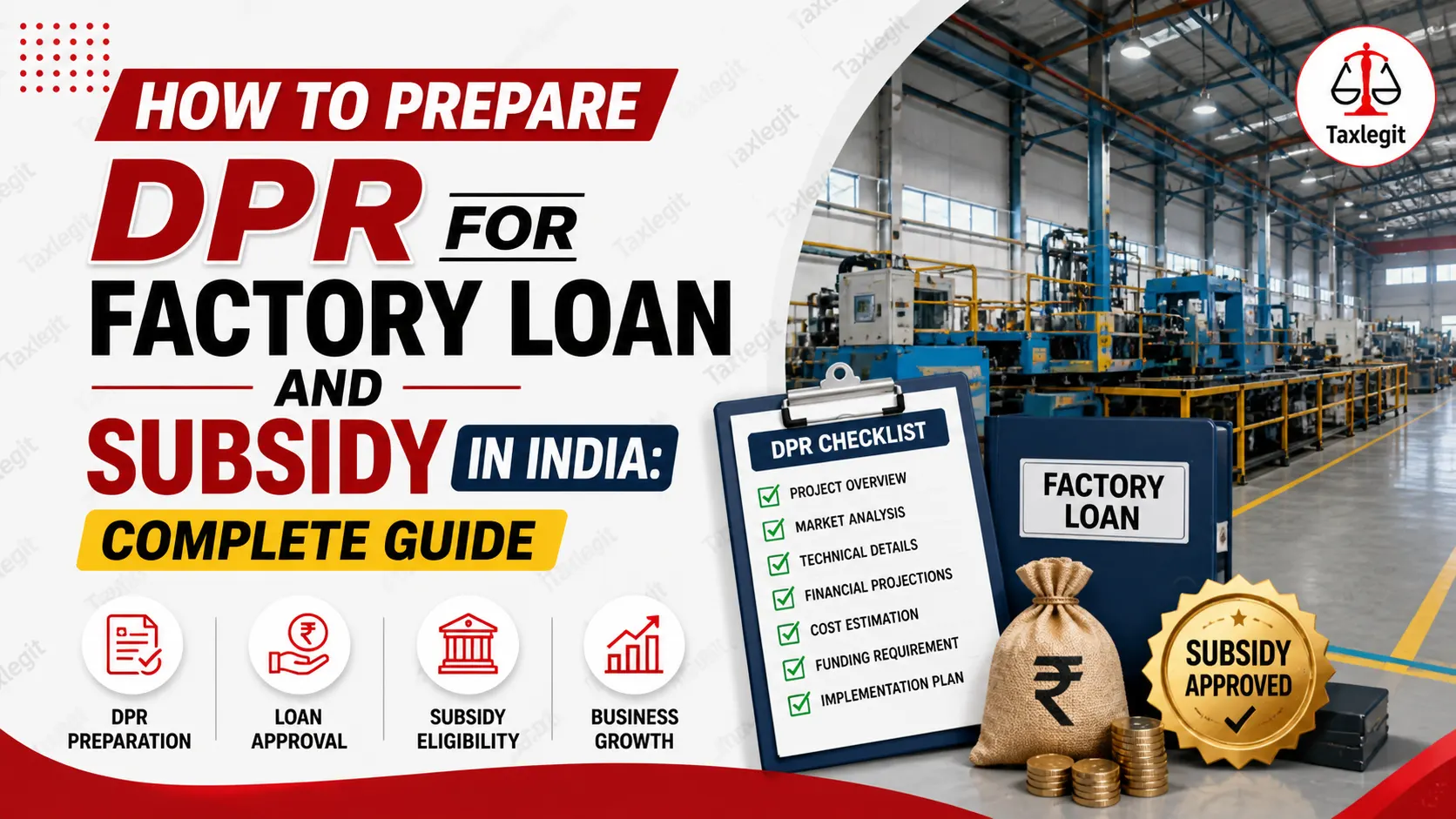
Detailed Project Report (DPR). A DPR is the blueprint of your business that determines whether a bank approves your loan or a government body grants you a subsidy. A poorly drafted report can lead to rejected funding, missed incentives, and operational failure.
This Taxlegit’s guide helps entrepreneurs and foreign investors understand how to build a professional, research-backed project report that gets results.
Quick Key Facts
- A Project Report is mandatory for MSME loans, Bank Finance, and PLI Schemes.
- Lenders look for a Debt-Service Coverage Ratio (DSCR) typically above 1.5 to 2.0.
- The report must include technical specifications, market analysis, and a 5-7 year financial forecast.
- Inaccurate cost estimations in a DPR are the #1 reason for project overruns.
- Specific formats are required for different purposes (e.g., PMEGP, TUF schemes, or FDI).
Table of Contents
- What is a Project Report for Manufacturing?
- Why a Professional DPR Matters?
- Who Needs a Detailed Project Report?
- Core Components of a Manufacturing Project Report
- Step-by-Step Guide to Creating Your Report
- Documents Required to Support Your DPR
- Common Mistakes to Avoid
- Practical Tips for Entrepreneurs
- FAQs
- Conclusion
What is a Project Report for Manufacturing?
A project report is a comprehensive document that evaluates every facet of your manufacturing proposed venture. It isn't just a "business plan"; it is a technical and financial feasibility study. It answers three critical questions for stakeholders:
1. Is it technically possible? (Machinery, raw materials, power, and location)
2. Is it financially viable? (Profitability, ROI, and payback period)
3. Is it legally compliant? (Pollution norms, licenses, and land usage)
Why a Professional DPR Matters
If you are a manufacturer in India, your DPR is your project's "Identity Card." It affects:
- Loan Approvals: Banks like SBI, SIDBI, or private lenders won't even look at your application without a bankable DPR that proves your repayment capacity.
- Government Subsidies: To unlock Production-Linked Incentives (PLI) or MSME capital subsidies, your report must align with specific government benchmarks.
- Investor Confidence: For PE or VC investors, a structured DPR shows that you have done the "groundwork" on market demand and risk factors.
- Operational Roadmap: It helps you track your actual progress against projected timelines, preventing sudden cash flow crises.
Who Needs a Detailed Project Report?
| Category | Primary Objective |
| New Startups | To secure seed funding and initial bank loans. |
| Existing Units | For expansion, diversification, or modernization of machinery. |
| Foreign Entities | To understand local costs, utility requirements, and FDI compliance. |
| MSMEs | To apply for PMEGP, CLCSS, or state-specific capital subsidies. |
| Large Corporates | For technical due diligence and large-scale industrial park setups. |
Core Components of a Manufacturing Project Report
| Section | What It Includes | Why It Is Critical |
| Technical Feasibility | Plant capacity, manufacturing process, utility requirements (Power/Water). | Proves you can actually produce the goods. |
| Market Analysis | Competitor study, target audience, pricing strategy, and demand-supply gap. | Shows there is a buyer for your product. |
| Project Costing | Land & Building, Plant & Machinery, Working Capital, Contingencies. | Sets the total investment required. |
| Financial Forecast | Projected Balance Sheet, P&L Statement, Cash Flow (5-7 years). | Shows the long-term health of the business. |
| Legal/Environmental | Pollution Control (Red/Orange/Green), GST, Factory License. | Ensures the project won't be shut down by regulators. |
Step-by-Step Guide to Creating Your Project Report
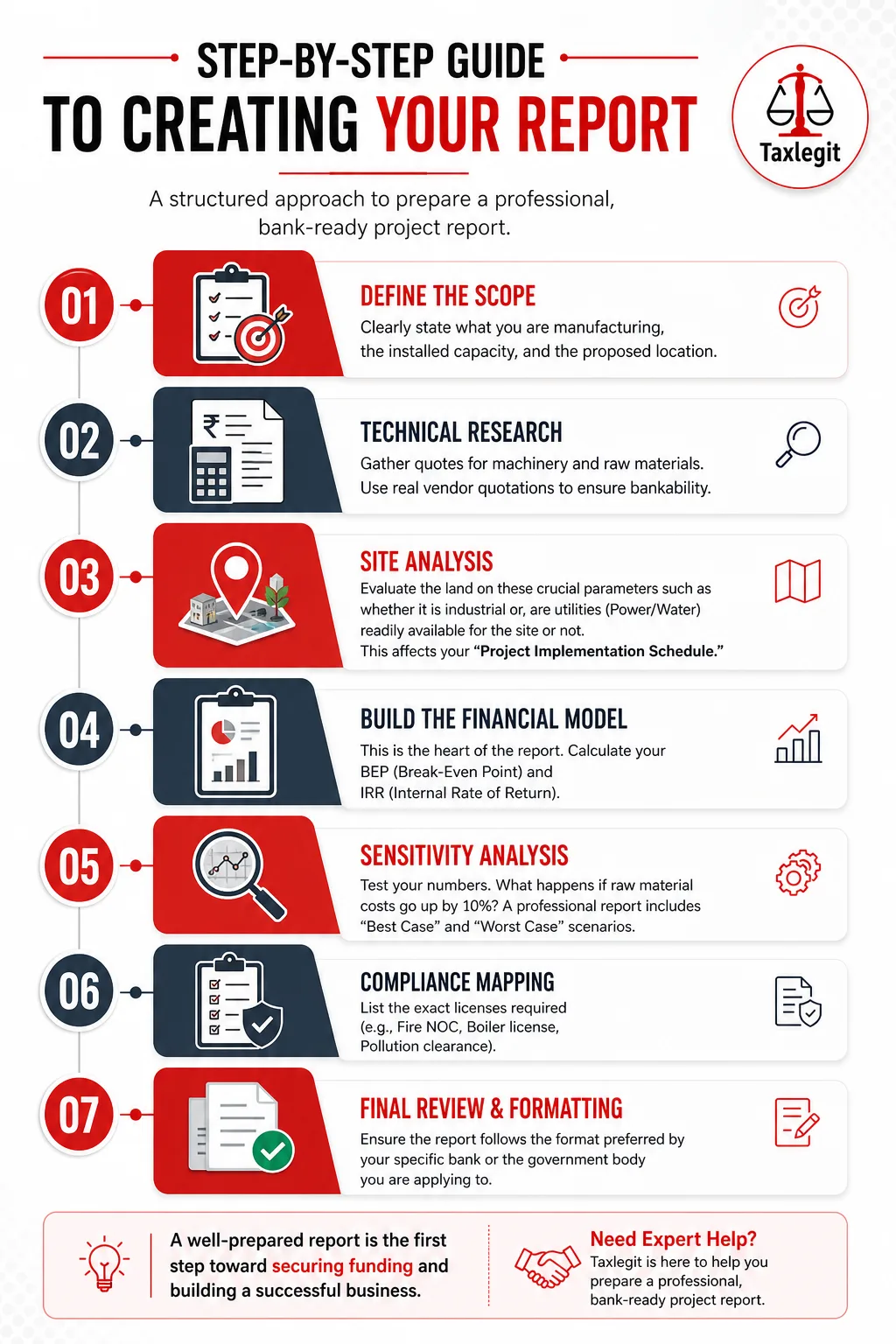
Step 1: Define the Scope: Clearly state what you are manufacturing, the installed capacity, and the proposed location.
Step 2: Technical Research: Gather quotes for machinery and raw materials. Use real vendor quotations to ensure bankability.
Step 3: Site Analysis: Evaluate the land on these crucial parameters such as whether it is industrial or, are utilities (Power/Water) readily available for the site or not. This affects your "Project Implementation Schedule."
Step 4: Build the Financial Model: This is the heart of the report. Calculate your BEP (Break-Even Point) and IRR (Internal Rate of Return).
Step 5: Sensitivity Analysis: Test your numbers. What happens if raw material costs go up by 10%? A professional report includes "Best Case" and "Worst Case" scenarios.
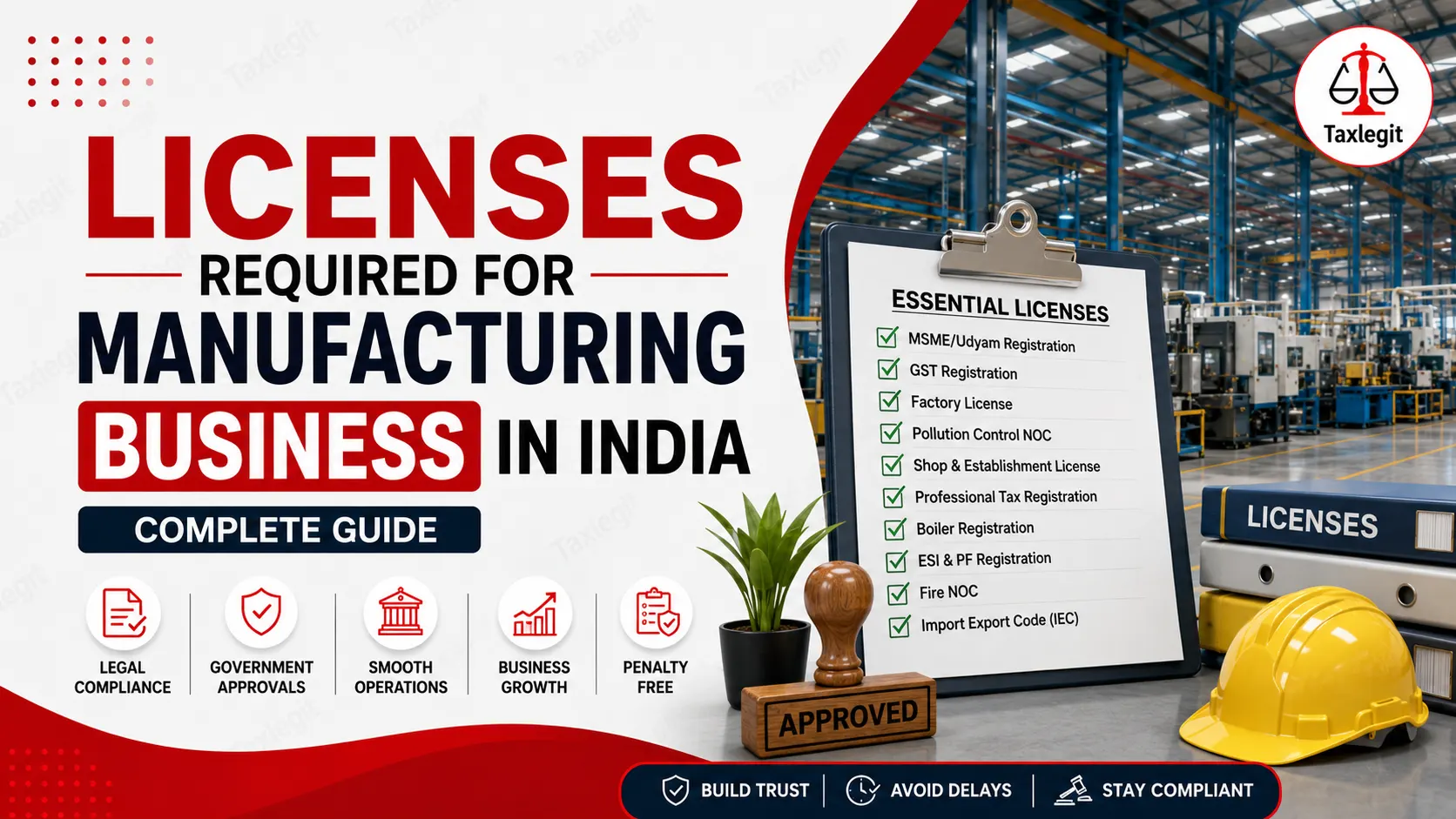
Step 6: Compliance Mapping: List the exact licenses required (e.g., Fire NOC, Boiler license, Pollution clearance).
Step 7: Final Review & Formatting: Ensure the report follows the format preferred by your specific bank or the government body you are applying to.
Documents Required to Support Your DPR
| Document | Purpose |
| Vendor Quotations | Validates the cost of machinery and equipment. |
| Land Documents | Lease deed or Sale deed to prove site control. |
| Promoter Profiles | KYC and experience certificates of the directors/partners. |
| Electricity/Water Sanction | Proves the unit has necessary utility support. |
| Market Letters of Intent | Optional, but proves demand to the bank. |
Common Mistakes to Avoid
- Overestimating Sales: Being too optimistic on Year 1 sales is a red flag for bank managers.
- Underestimating Working Capital: Manufacturing involves long credit cycles; failing to account for 3-6 months of working capital can kill a project.
- Ignoring Local Laws: Not accounting for state-specific labor welfare funds or pollution norms.
- Copy-Pasting Templates: A generic report from the internet will fail a bank's technical appraisal.
Practical Tips for Entrepreneurs
- Engage a Professional Early: Don't wait for the bank to ask for a report. Work with a consultant to map out your feasibility before you buy land or machinery.
- Benchmark Your Costs: Ensure your machinery costs align with current market rates. Banks use technical cells to verify these numbers.
- Include an Implementation Schedule: Use a Gantt chart to show when the factory building will be ready and when commercial production will start.
- Keep it Dynamic: A DPR should be a living document. Update it as market conditions or raw material prices shift.
The Taxlegit Difference: From Idea to Execution
At Taxlegit, we don't just "fill out forms." We engage in a deep, research-driven exercise to ensure your project is investor-grade and bank-compliant. We help you with:
- Custom Financial Modelling: Realistic projections that withstand bank scrutiny.
- Compliance Mapping: Identifying every license you need to start operating.
- Subsidy Optimization: Aligning your DPR with PLI and MSME schemes to maximize your incentives.
Frequently Asked Questions (FAQs)
Q1. Is a Project Report mandatory for a manufacturing bank loan in India?
A: Yes, Whether you are applying to a nationalized bank (like SBI or PNB) or a private lender, a Project Report is the primary document used for credit appraisal. It proves your project’s technical feasibility and your ability to repay the debt.
Q2. Can I use a generic template for my manufacturing DPR?
A: It is not recommended. Every manufacturing unit has unique costs, location-specific utility rates, and varied raw material supply chains. Generic templates often lead to rejection during the technical scrutiny phase by bank managers or government officials.
Q3. What is the typical timeframe to prepare a bankable Project Report?
A: A high-quality, research-backed report usually takes 7 to 14 working days. This includes time for market research, gathering machinery quotations, and building complex financial models for 5–7 year projections.
Q4. How does a Project Report help in claiming government subsidies?
A: Schemes like the PLI (Production Linked Incentive) or state-specific capital subsidies require a detailed breakdown of your "Fixed Capital Investment." Your DPR must clearly map these investments to ensure they meet the specific eligibility criteria of the scheme.
Q5. Do I need to include a "Sensitivity Analysis" in my report?
A: Yes. Banks in 2026 specifically look for sensitivity analysis. This shows how your business would perform if raw material costs rise or sales prices drop. It demonstrates to the lender that you have a plan for market volatility.
Q6. What is the difference between a Business Plan and a Project Report?
A: A business plan is often a pitch for investors focused on vision and growth. A Project Report (DPR) is a technical document focused on execution covering engineering details, civil costs, machinery specs, and detailed financial ratios like DSCR and Break-Even Point.
Q7. Can Taxlegit help if my project involves foreign investment (FDI)?
A: Absolutely. For foreign companies entering India, we tailor the DPR to align with both Indian banking standards and international reporting requirements, ensuring a smooth entry into the Indian manufacturing landscape.
Conclusion
In the competitive landscape of 2026, a manufacturing business cannot just rely on a "good idea" alone. It requires a solid, data-backed foundation. Your Project Report is the bridge between your industrial vision and the capital needed to make it a reality.
Whether you are looking to unlock massive government subsidies, secure a high-value bank loan, or bring in foreign capital, your DPR must be bulletproof. Don’t leave your project’s success to chance. Contact Taxlegit today to get your professionally drafted Project Report and take the first decisive step toward your manufacturing success in India.
About the Author

Srijita
Content Writer
Srijita is a legal and financial content specialist with 5+ years of experience in the Indian corporate sector. She simplifies MCA regulations and tax compliance into clear, actionable insights for entrepreneurs, working closely with Chartered Accountants and legal experts to ensure accuracy and compliance. Reviewed by Vipul Sharma, Co-Founder, Taxlegit.