
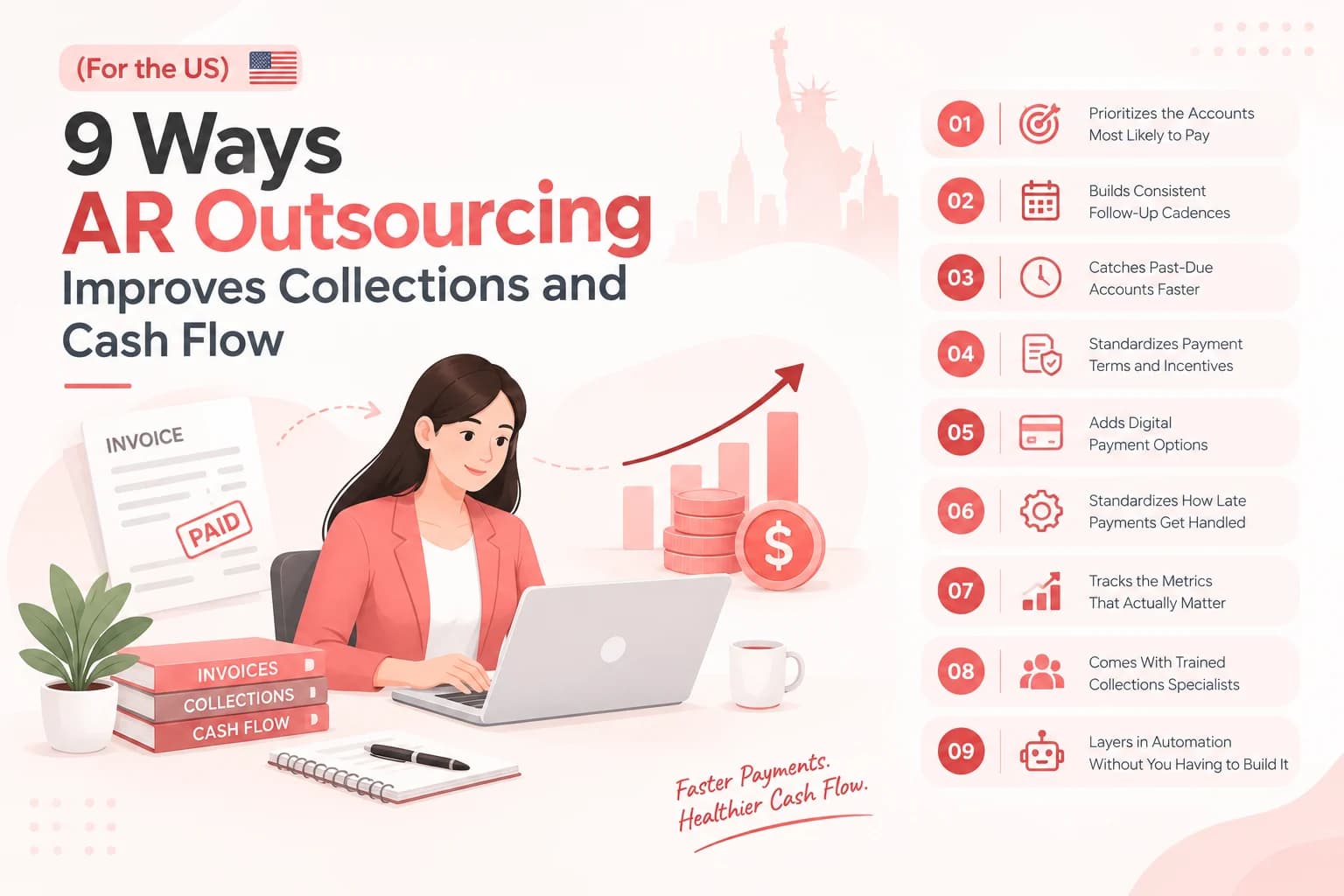
Outsourcing your accounts receivable (AR) function speeds up how fast you get paid by adding dedicated staff, consistent follow-up, and better tools to a process that often gets neglected in-house. And as a result, the cash shows up in your bank account instead of sitting in unpaid invoices.
If your team is spending more time chasing payments than closing the books, you're not alone. Small-business invoices in the U.S. now take an average of nearly 29 days to get paid, and that number has been creeping up, not down. When collections slip, it ties up cash you need for payroll, inventory, and growth. Here are nine specific ways bringing in an AR outsourcing partner can tighten up that process and get money moving again.
1. It Prioritizes the Accounts Most Likely to Pay
Outsourced AR teams don't treat every overdue invoice the same. They score accounts by size, age, and payment history, then put their effort where it counts. Chasing every $200 invoice with the same urgency as a $50,000 one wastes time. A dedicated team knows which accounts to work first to protect your cash flow.
2. It Builds Consistent Follow-Up Cadences
One of the biggest reasons invoices go unpaid is simple: nobody follows up on time. Outsourcing partners run structured reminder schedules so no account quietly slips past its due date. That consistency alone tends to shrink the number of accounts that drift into "seriously overdue" territory.
3. It Catches Past-Due Accounts Faster
In-house teams often review aging reports monthly, if that. Outsourced providers typically review past-due accounts weekly or even daily, acting on red flags before they turn into write-offs. The sooner a slow-paying account gets attention, the better your odds of collecting in full.
4. It Standardizes Payment Terms and Incentives
A good outsourcing partner helps you set clear, consistent payment terms across all customers instead of ad hoc deals negotiated deal-by-deal. Many also help structure early-payment discounts, which give customers a real reason to pay sooner rather than later.
5. It Adds Digital Payment Options
Getting paid by check still means waiting on the mail and manual deposits. Outsourced AR providers typically bring online payment portals and multiple payment methods to the table, making it easier for customers to just pay the invoice the moment they see it, instead of setting it aside "for later."
6. It Standardizes How Late Payments Get Handled
Instead of different staff members handling collections calls differently, an outsourced team runs one consistent process for every account. That means fewer accounts fall through the cracks, and customers get a professional, predictable experience which actually helps preserve the relationship, not damage it.
7. It Tracks the Metrics That Actually Matter
A good AR partner doesn't just collect they report. You'll typically get visibility into:
| Metric | What It Measures | Why It Matters |
| Days Sales Outstanding (DSO) | Average days to collect payment after a sale | Lower DSO means faster cash conversion. |
| Average Days Delinquent (ADD) | Average days a payment is late past its due date | Shows how far behind your slowest payers are |
| Collection Effectiveness Index (CEI) | How well your collections process actually converts receivables into cash | Higher CEI means a tighter, more effective process |
Tracking these consistently makes it possible to catch problems early instead of after they've already hurt your cash flow.
8. It Comes With Trained Collections Specialists
Collections is a skill. People who do it full-time and get ongoing training on best practices and compliance tend to get better results than an internal team member handling it as one task among many. Outsourcing gives you access to that specialization without having to build and train a team yourself.
9. It Layers in Automation Without You Having to Build It
Modern AR outsourcing providers combine trained staff with automated tools such as automatic invoice delivery, payment reminders, and real-time dashboards so you get the best of both. Despite the clear upside, many companies still run AR processes mostly manually internally, which is exactly where outsourcing tends to close the gap fastest.
Why these changes work:
- Focuses on the outcome over the arithmetic: Instead of spelling out ($3M ÷ 365 × 8) inline which breaks the reader's focus the math is kept clean so the financial impact lands faster.
- Reframes DSO into concrete reality: Phrases like "trapped in someone else's AP queue" or "invoice limbo" build immediate emotional resonance for business owners who know the frustration of chasing payments.
The Bottom Line
Improving collections isn't about working harder it's about running a more disciplined process, and that's exactly what a good AR outsourcing partner brings to the table. From faster follow-up to better reporting to more payment options for your customers, these nine changes add up to real, measurable cash flow improvement.
If your DSO has been climbing and your team is stretched thin, Taxlegit's accounts receivable outsourcing services can help you build a collections process that actually keeps pace with your business. Get in touch with our team to see where your AR process stands today and how much cash might be sitting in unpaid invoices right now.
Frequently Asked Questions
Not if it's done right. Most providers offer white-labeled communication under your brand, following a professional, consistent process which often improves the customer experience rather than damaging it.
Many businesses see measurable movement in DSO and collection rates within the first 60–90 days, though full process maturity takes longer.
No, You set the policies payment terms, escalation rules, discount thresholds the outsourced team executes them consistently.
No, Small and mid-sized businesses often see the biggest relative improvement, since they're the ones least likely to have a dedicated in-house collections function already.
About the Author

Srijita
Content Writer
Srijita is a legal and financial content specialist with 5+ years of experience in the Indian corporate sector. She simplifies MCA regulations and tax compliance into clear, actionable insights for entrepreneurs, working closely with Chartered Accountants and legal experts to ensure accuracy and compliance. Reviewed by Vipul Sharma, Co-Founder, Taxlegit.